
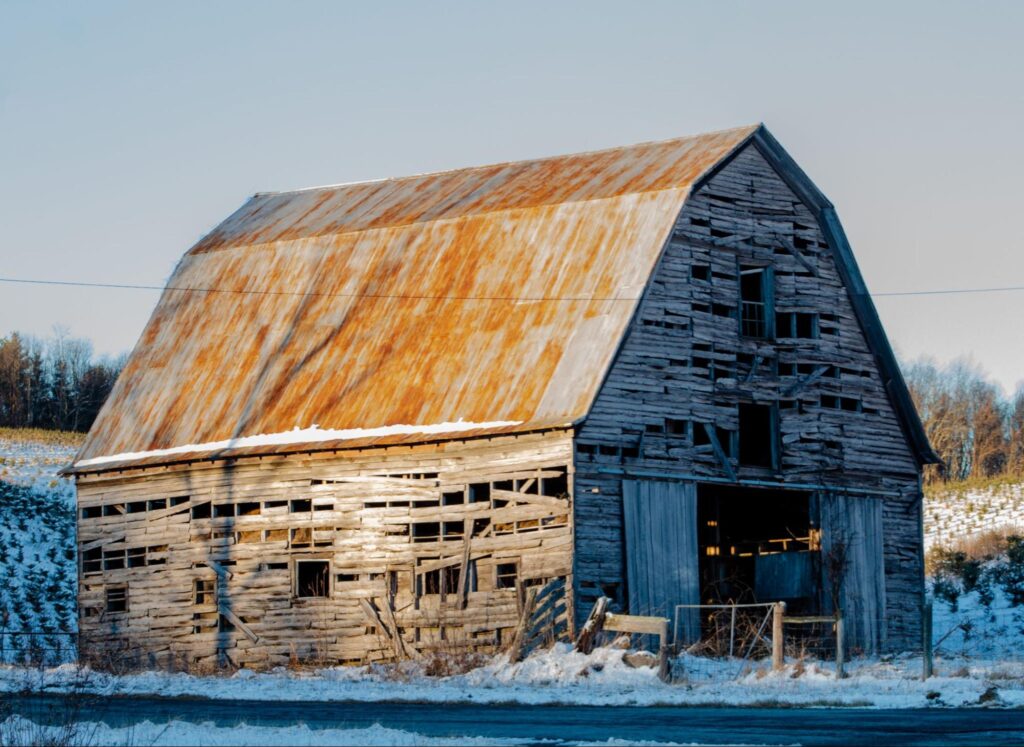
Your family’s barn has stood for nearly a century. The timber beams still hold strong, but the roof sags a bit more each winter. You know it needs work—real work—before it’s too late.
The problem? A full barn restoration in New York can cost $60,000 to $100,000. That’s money most families don’t have sitting around.
Here’s something you might not know. New York State offers a New York barn tax credit that gives you 25% back on your barn rehab costs. If you spend $80,000 fixing up grandpa’s barn, you could get $20,000 back as a state tax credit.
This program helps barn owners across New York save their historic structures without going broke. The best part? You don’t need your barn listed on any special register. You just need a barn built before 1946 and a plan to preserve it the right way.
Let’s walk through exactly how this works.
What Is the New York Barn Tax Credit?
The barn rehabilitation tax credit is a state program run by the New York Office of Parks, Recreation and Historic Preservation. It partners with the NY Department of Taxation and Finance.
Here’s how it works. You fix up your old barn. The state reviews your work. If everything checks out, you get 25% of your qualified expenses back as a credit against your New York State income tax.
This is a real tax credit, not just a deduction. That means if you owe $15,000 in state taxes and you get a $15,000 barn credit, you pay zero state tax that year.
The program was reinstated/improved and began being claimable starting with 2022 tax activity, after legislation signed by Governor Hochul.. Before that, an older version existed but got tangled up in federal tax code changes. The new program fixed those issues.
Who Can Get the 25% Barn Tax Credit New York?
Not every barn owner qualifies. The state has clear rules about who can use this program.
You need to meet all these requirements:
- You must pay New York State income tax. This credit only works for state taxes, not federal.
- Your barn must have been built before 1946. If you’re not sure when your barn was built, the Division for Historic Preservation staff can help you figure it out. If your barn was built after 1945, it can still qualify if it’s part of a property listed on the State or National Register of Historic Places.
- The barn was originally used for farming or related work. This covers hay barns, dairy barns, livestock barns, stables, carriage houses, corn cribs, milk houses, and smokehouses. Even if your barn isn’t used for farming anymore, it still qualifies as long as it started out that way.
- You plan to spend at least $5,000 on repairs. This is the minimum to qualify. There’s no maximum. Some barn owners have claimed credits on $200,000 restoration projects.
- The barn must not have been used as a residence within one year before you apply, and your project can’t convert the barn into a residence
- Your work won’t change how the barn looks. This is important. The state wants to preserve the historic character. You can replace old materials with new ones, but the barn should still look like a barn when you’re done.
What Barn Work Qualifies for the Tax Credit?
The state calls approved expenses “qualified rehabilitation expenditures” or QREs. That’s just fancy talk for the types of repairs that count toward your credit.
Most structural barn work qualifies. This includes:
- Roof repairs or replacement. Roof repair or replacement can qualify, including replacement using approved materials. The state understands that traditional materials aren’t always practical.
- Foundation and structural framing work. This covers fixing stone foundations, replacing rotted sill beams, reinforcing posts and beams, and stabilizing the structure.
- Window and door restoration. You need to keep the original size and placement, but you can repair or replace them with matching materials.
- Exterior siding repairs. Same rule; keep it looking like it did before.
- Interior structural elements. Things like stalls, hay mows, floor joists, and support beams all count.
- Masonry repairs on foundations or chimneys.
- Work to meet ADA or OSHA safety codes if you’re converting the barn to business use.
- Mechanical, electrical, and plumbing upgrades. These count as long as they don’t change the barn’s historic appearance.
- Professional fees. Architect fees, engineering studies, and preservation consultant costs all qualify.
Here’s what doesn’t qualify:
- Work that adds square footage or changes the barn’s footprint
- New interior walls or partitions for non-barn uses
- Adding full kitchens or bathrooms for conversion projects
- Drywall, carpeting, or other finishing materials that aren’t barn-appropriate
- Demolition or trash removal costs Landscaping or site work
The key is this: your work should preserve the barn, not turn it into something else.
How to Apply for the Pre-1946 Barn Tax Credit
The application has three parts. You submit Parts 1 and 2 together before or during your project. Part 3 comes after you finish the work.
Part 1: Basic Information
This part tells the state about you and your barn. You’ll provide:
Your name and address The barn’s location When the barn was built (or your best guess) Photos of the barn’s current condition Proof the barn was used for agriculture
You’ll submit Parts 1 and 2 together (before or during the project). Be ready to include clear photos of all exterior sides and the areas being repaired. Follow the NYS Parks submission instructions for photos and application delivery.
Part 2: Your Barn Project Plan
Here you describe what work you plan to do. You need:
A description of the barn’s current condition Details of the repairs you’ll make Estimated costs for each type of work (you don’t need contractor quotes yet) Photos showing where the work will happen
The state will review Parts 1 and 2. If approved, you’ll get a certification letter that says you can start work. This usually takes a few weeks.
Part 3: Proof You Finished the Work
After you complete the repairs, you submit Part 3. This includes:
A description of what you actually did Photos of the completed work Final cost totals for each category of work
You generally don’t submit receipts with Part 3, but keep invoices and records in case the Department of Taxation and Finance requests them.
Once Part 3 is approved, the state will send you a Certificate of Completion. This shows how much credit you earned. You’ll use this certificate when filing your New York State taxes.
You can claim the credit in the tax year when Part 3 gets approved. If your credit is bigger than your tax bill, talk to your tax pro about how the unused amount is handled on your NYS return.
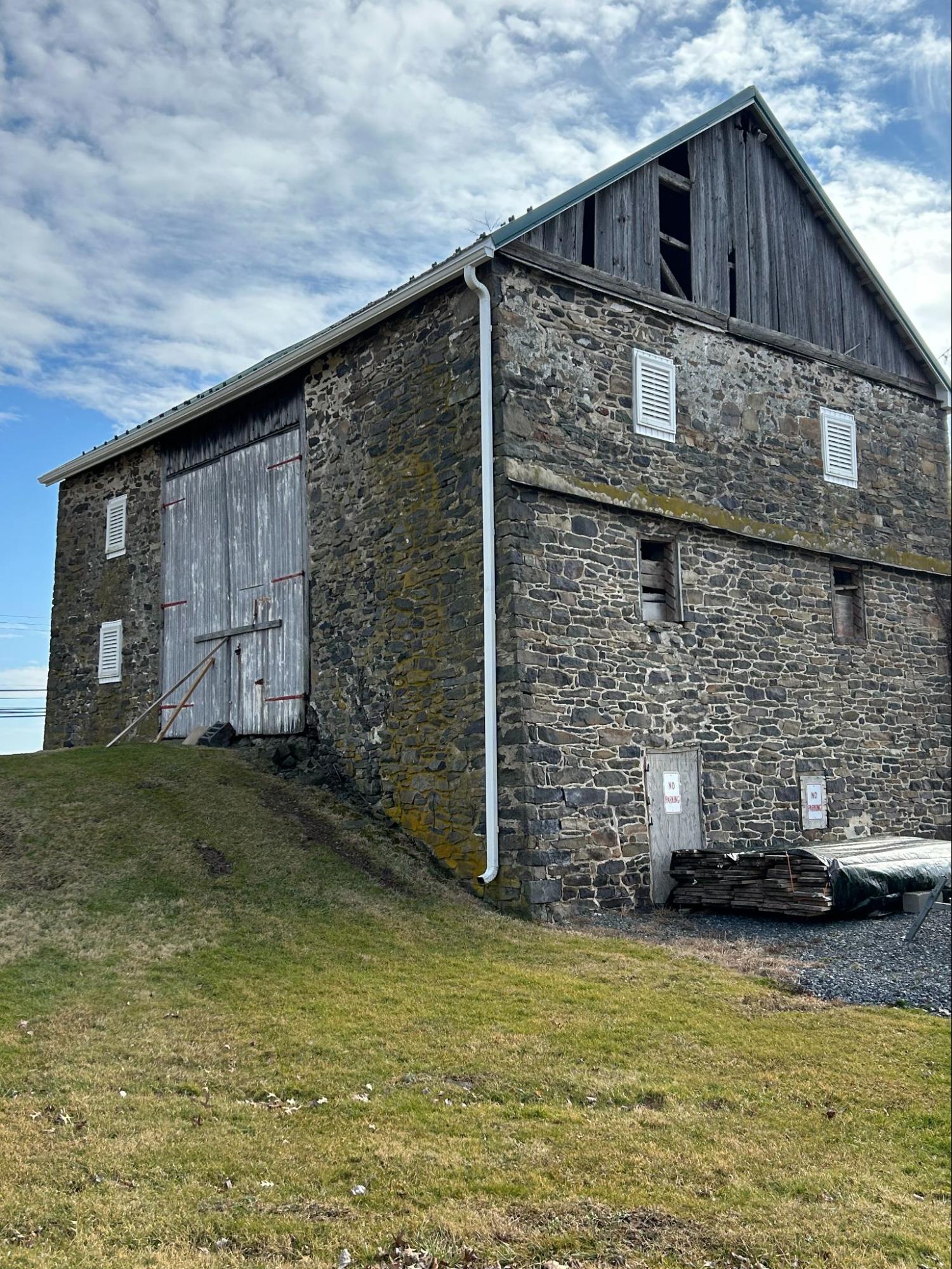
Can You Claim the Credit for Work Already Done?
Yes. The program is retroactive for up to five years.
Let’s say you fixed your barn’s foundation in 2023 and replaced the roof in 2024. You can still apply for the credit in 2026 as long as you have documentation of the work and costs.
This is helpful for barn owners who started repairs before learning about the program. Just make sure you have:
Photos of the barn before the work started Photos of the completed work Records of what you spent Documentation that the work met preservation standards.
How Woodford Barn Repair Can Help
We’ve been fixing barns in New York for over 50 years. Our work naturally meets the state’s preservation standards because we’ve always focused on keeping the original character of these structures.
When you work with us on your barn rehab, we document everything properly. We take photos at each stage. We keep detailed records of materials and work completed. This makes your Part 3 application much easier.
We also understand which repairs qualify and which don’t. We can help you plan your project to get the maximum tax credit while still achieving your goals for the barn.
Many of our clients have successfully used this tax credit. We know the process and can guide you through it.
Take the Next Step
New York’s barns are disappearing. Every year, more historic structures collapse or get torn down because the cost to save them seems too high.
The 25% barn tax credit changes that math. It makes preservation affordable for families who want to keep their heritage standing.
If you have a pre-1946 barn in New York, you owe it to yourself to look into this program.
Ready to start your NYS barn restoration project? We’ll help you plan work that qualifies for the maximum credit while bringing your family’s barn back to life. Give us a call at 1-800-OLD-BARN or contact us online for a free consultation.
Your barn has been part of New York’s landscape for generations. Let’s make sure it stays that way for generations more.
